Publication 97 · Wind-farm flow
A three-dimensional dynamic mode decomposition analysis of wind farm flow aerodynamics
X. Dai, D. Xu, M. Zhang, R.J.A.M. Stevens, Renewable Energy 191, 608-624 (2022).
Read the article Open-access version
Main finding
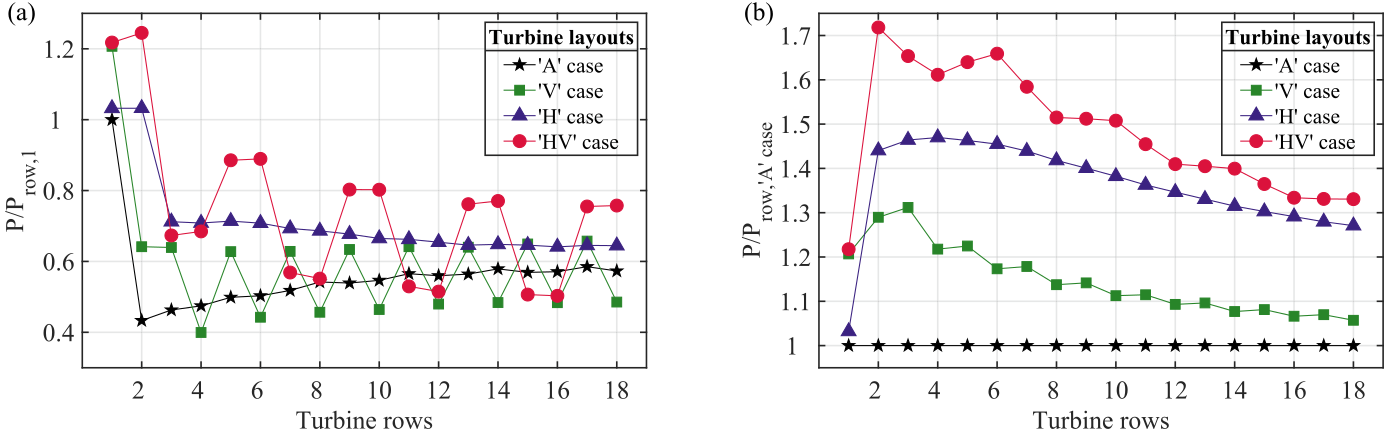
Wind-farm layout changes organized flow structures, while the DMD reconstruction method determines which persistent structures are retained. The tested layout and reconstruction results do not establish a universal design rule or validated low-order controller.
Why this matters
Turbine arrangement changes organized farm-scale motion, while the chosen DMD reconstruction determines which persistent structures remain visible.
Research context
Builds on Characterizing the Coherent Structures Within and Above Large Wind… (read the finding), Flow Structure and Turbulence in Wind Farms (read the finding), Large eddy simulations of the effect of vertical staggering… (read the finding), and DMD/POD studies cited in the article. Connects to later reduced-order and turbine-model-fidelity papers but is not independent of the same LES lineage.
View in the complete publication list Related wind-farm research