Publication 72 · Atmospheric turbulence
Wall modeled immersed boundary method for high Reynolds number flow over complex terrain
L. Liu, R.J.A.M. Stevens, Computers & Fluids 208, 104604 (2020).
Read the article Open-access version
Main finding
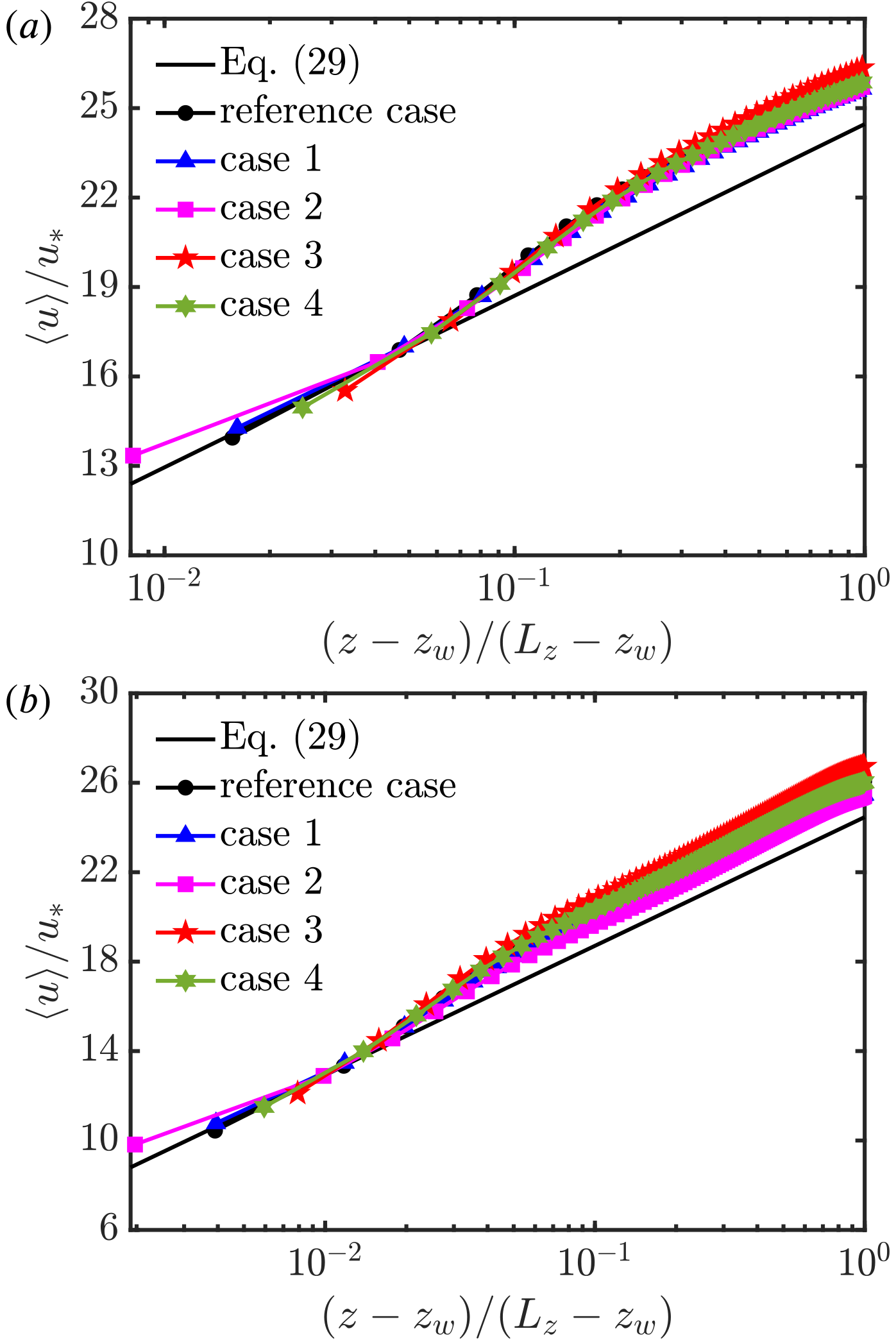
A simplified wall-modelled immersed-boundary treatment retains mean-flow and stress agreement in several canonical neutral test cases. These within-implementation comparisons do not establish general terrain accuracy or quantify the claimed parallel-performance advantage.
Why this matters
Complex terrain requires numerical representation when atmospheric walls cannot be resolved.
Research context
The method separates vertical velocity and shear-stress treatment at immersed wall nodes and removes extrapolation and iterative relaxation. The comparisons show retained mean-flow and stress fidelity within canonical neutral cases; terrain applications remain a separate test of the solver.
View in the complete publication list Related atmospheric boundary layer research