Publication 126 · Atmospheric turbulence
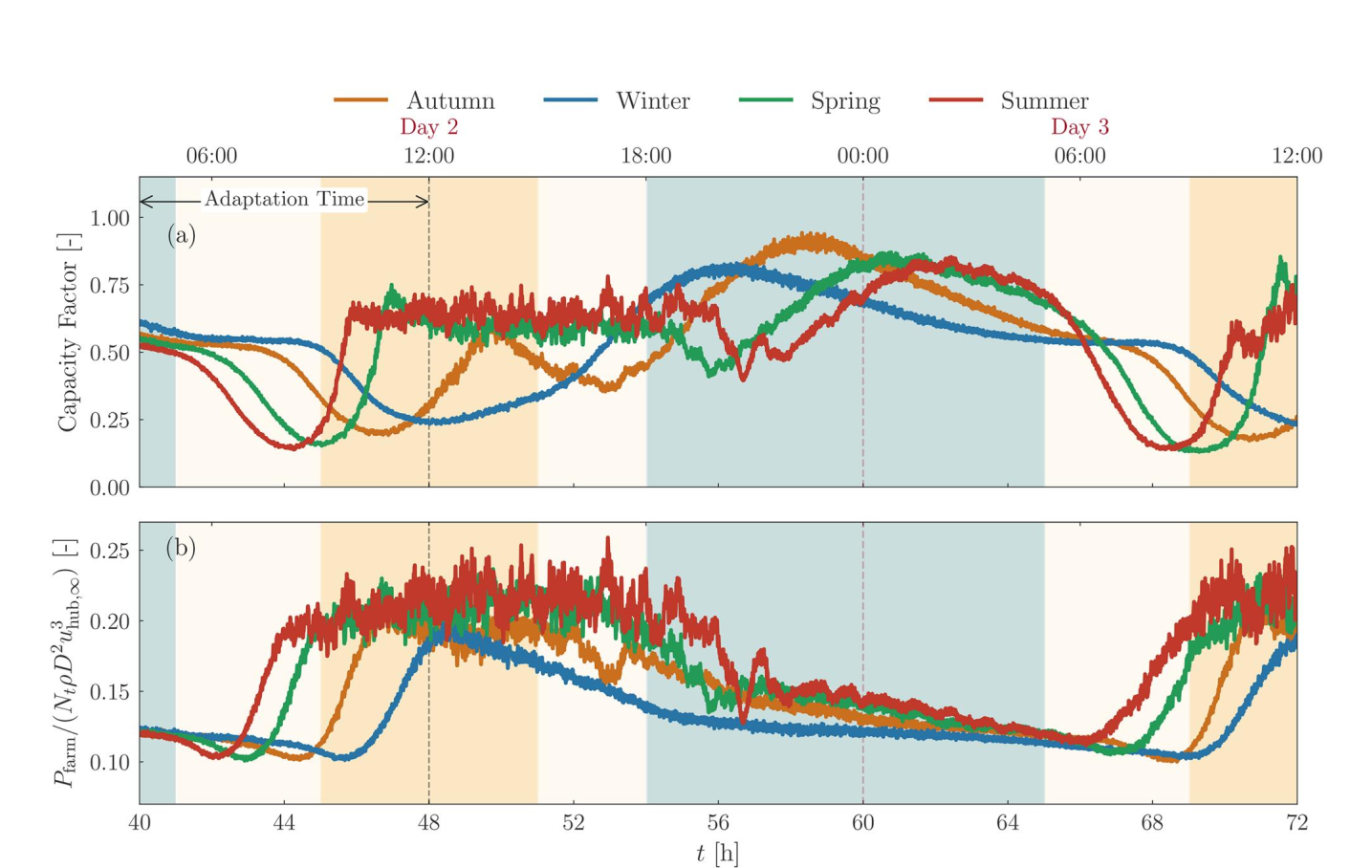
Diurnal surface heat-flux forcing controls wind-farm performance, blockage, and gravity-wave formation
M. Pasupula, D. Selvatici, J.H. Kasper, R.J.A.M. Stevens, J. Renewable Sustainable Energy 18, 043303 (2026).
Main finding
Diurnal surface heating and cooling change wind-farm performance through coupled changes in stability, boundary-layer depth, jets and momentum transport. The simulated response cannot be reduced to an isolated heat-flux coefficient or universal seasonal ranking.
Why this matters
Diurnal stability changes alter momentum entrainment, blockage, wave response, and wake recovery, so farm performance cannot be inferred from surface heat flux alone.
Research context
Related work on low-frequency temporal variability includes Low-frequency wind speed variations and their impact on wind… (read the finding) and Modeling Multiscale Atmospheric Interactions in Wind-Farm Power Spectra (read the finding). Slow wake recovery and low turbulence behind wind farms… (read the finding) addresses mesoscale wake recovery.
View in the complete publication list Related atmospheric boundary layer research