Publication 44 · Wind-farm flow
Combining economic and fluid dynamic models to determine the optimal spacing in very large wind-farms
R.J.A.M. Stevens, B. Hobbs, A. Ramos, C. Meneveau, Wind Energy 20 (3), 465-477 (2017).
Read the article Open-access version
Main finding
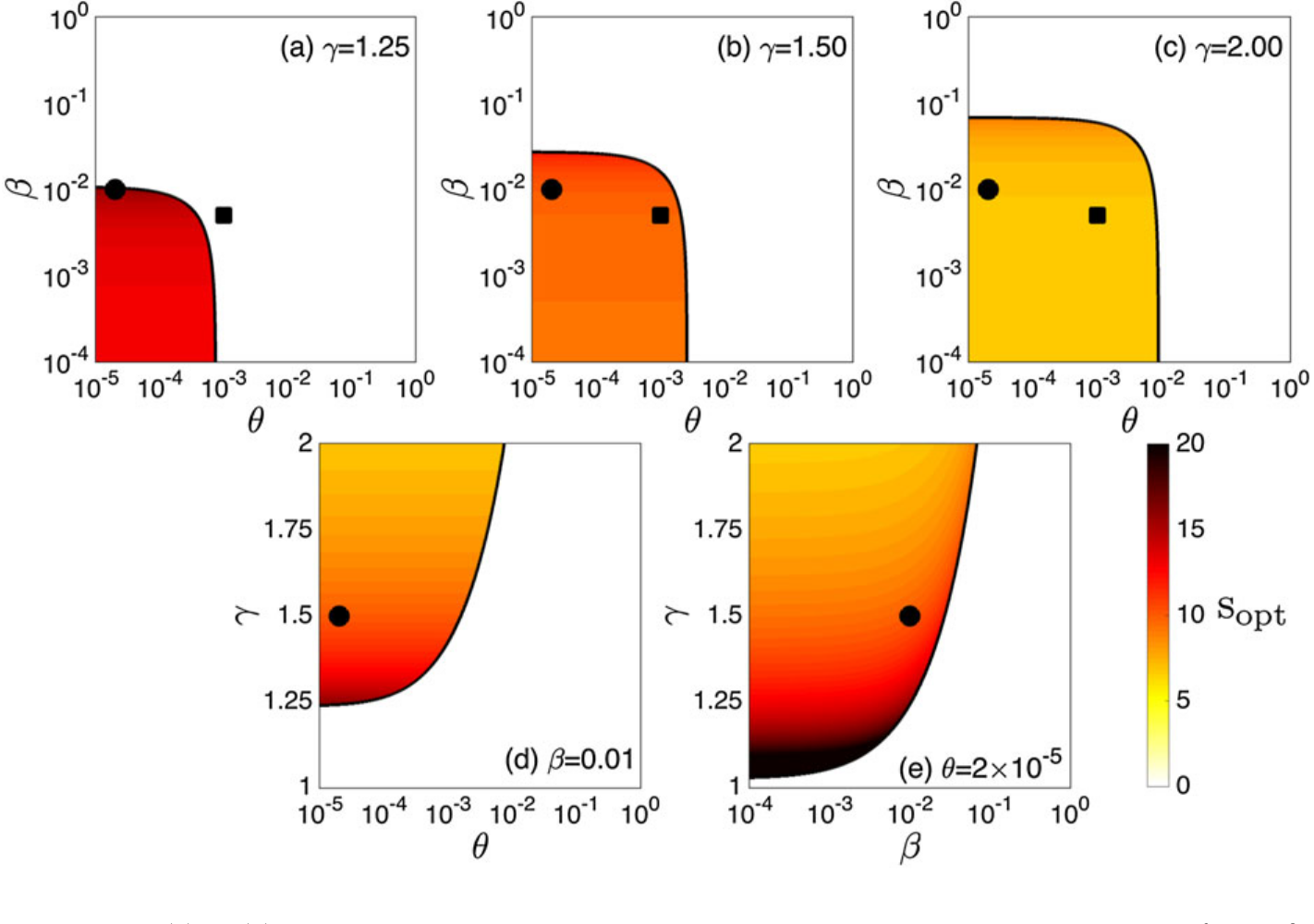
Under the reference cost-minimization parameterization, conditional optima are approximately 16D offshore and 12D onshore. For profit per fixed area, greater revenue relative to costs shifts the optimum inward: roughly above 16D or 14D at revenue parameter 1.25, near 10D at 1.5, and near 7D at 2.
Why this matters
Supports the qualitative conclusion that “optimal spacing” is objective- and cost-dependent.
Research context
The model balances turbine density against wake loss, infrastructure and land costs, and an assumed turbulence-related maintenance penalty. Its cost inputs are approximate and site dependent, and it omits uncertainty distributions and several project-specific constraints.
View in the complete publication list Related wind-farm research