Publication 13 · Thermal convection
Horizontal structures of velocity and temperature boundary layers in two-dimensional numerical turbulent Rayleigh-Bénard convection
Q. Zhou, K. Sugiyama, R.J.A.M. Stevens, S. Grossmann, D. Lohse, K.-Q. Xia, Phys. Fluids 23, 125104 (2011).
Read the article Open-access version (arXiv manuscript)
Main finding
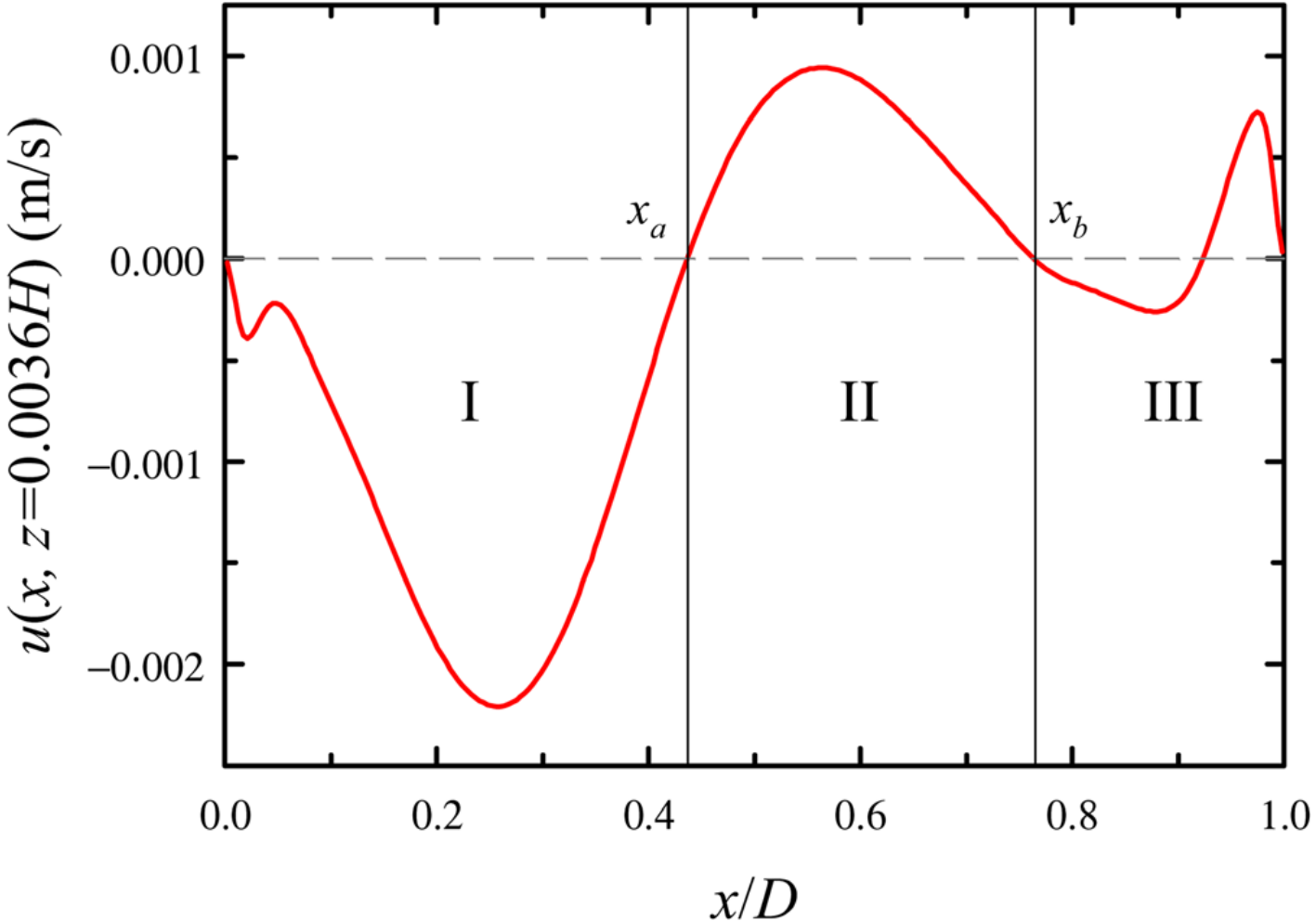
The paper provides useful evidence that an instantaneous tangent-based coordinate regularizes local profile analysis across a complex 2D plate. Its PB agreement is a conditional processed-profile result, not a universal local law or independent validation of laminar boundary-layer theory.
Why this matters
A moving local thickness can prevent opposing flows from cancelling into a meaningless average layer.
Research context
Zhou et al. (2010) established centre-region dynamic collapse using four 2D DNS cases and experimental velocity evidence. The present paper adds horizontal structure in one 2D run, but uses the same code/method lineage and a near-matching Ra=10^8, Pr≈4.3–4.4 setup.
View in the complete publication list Related thermal convection research