Publication 96 · Atmospheric turbulence
Wind farm blockage in a stable atmospheric boundary layer
J.M.I. Strickland, S.N. Gadde, R.J.A.M. Stevens, Renewable Energy 197, 50-58 (2022).
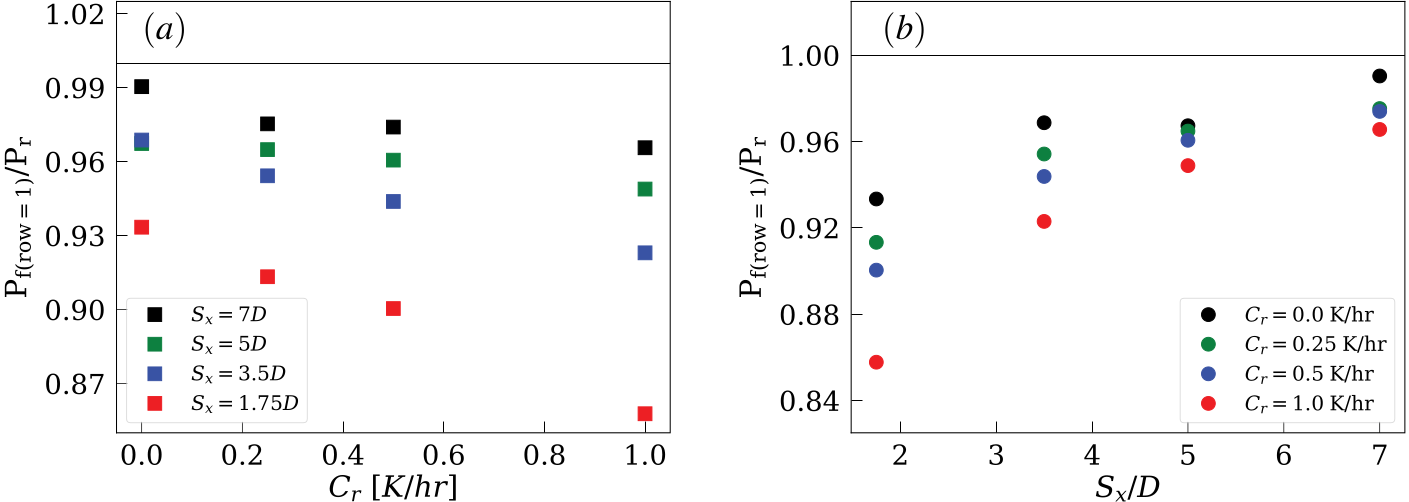
Main finding
The article isolates surface-cooling effects on wind-farm blockage while deliberately excluding a capping inversion and its gravity-wave pathway. Boussinesq LES uses AMD and filtered actuator disks (D=125 m, z_h=100 m, C_T=0.85). Geostrophic speed is 12 m s^-1, f=1.159e-4 s^-1.
Why this matters
It supports the idea that a farm can slow flow before the first row and that stability strengthens the effect.
Research context
By excluding a capping inversion, the simulations isolate a cooling-associated entrance response from the usual gravity-wave pathway. The cooling sweep also changes boundary-layer depth, low-level-jet structure, veer, and turbulence, so it does not establish a solely hydrostatic cause.
Related findings: Investigating wind farm blockage in a neutral boundary layer using large-eddy simulations; Low-level cloud radiative forcing enhances wind-farm wake recovery.
View in the complete publication list Related atmospheric boundary layer research